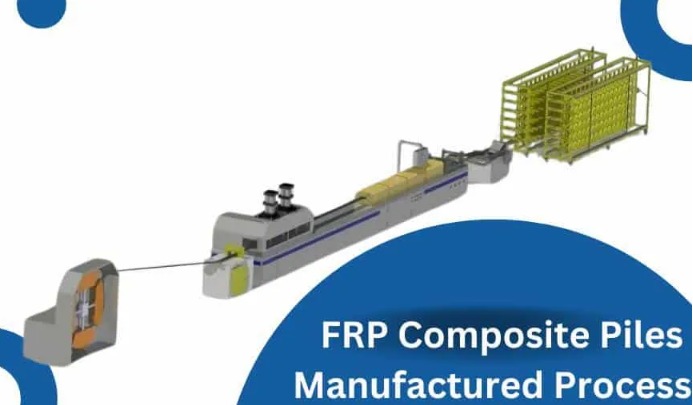
Pultrusion is a vital manufacturing process in the production of fiber-reinforced plastics. It allows manufacturers to produce high-strength, lightweight composite profiles with consistent cross-sections. Central to this process is the pultrusion machine, which determines the efficiency, quality, and versatility of the products. However, not all pultrusion machines are created equal. Depending on your production requirements, the type of machine you choose can significantly impact your output and cost-effectiveness. In this article, we will compare different types of pultrusion machines and help you determine which one is right for your operation.
Understanding the Pultrusion Process
Before diving into the different machines, it’s essential to understand how pultrusion works. The process involves pulling continuous fiber reinforcements, such as glass, carbon, or aramid fibers, through a resin bath to saturate them. These fibers are then pulled through a heated die that shapes and cures the composite material. The pultrusion machine is the central equipment that manages this process, controlling fiber tension, resin impregnation, heating, and pulling speed. The right pultrusion machine ensures high-quality, uniform profiles, while the wrong one can lead to defects, waste, and increased operational costs.
Types of Pultrusion Machines
Pultrusion machines are typically classified based on their pulling mechanism, die configuration, automation level, and intended production scale. Here are the most common types:
Conventional Pultrusion Machines
Conventional pultrusion machines are widely used in standard composite manufacturing. They usually feature a hydraulic or mechanical pulling system and a heated die. These machines are reliable for producing straight profiles like rods, channels, and beams.
Advantages:
- Simple design, easy to operate and maintain
- Suitable for low to medium production volumes
- Cost-effective for small businesses
Limitations:
- Limited flexibility in profile shapes
- Manual adjustments required for complex profiles
- Slower production speed compared to automated systems
CNC Pultrusion Machines
Computer Numerical Control (CNC) pultrusion machines integrate automation into the process, offering precise control over pulling speed, fiber placement, and resin application. These machines are ideal for manufacturers who require high precision and complex profiles.
Advantages:
- High precision and repeatability
- Suitable for complex and varied profiles
- Reduces human error and labor costs
Limitations:
- Higher initial investment
- Requires trained operators
- Maintenance can be more complex than conventional machines
Multi-Directional Pultrusion Machines
Unlike conventional machines that produce straight profiles, multi-directional pultrusion machines allow the creation of profiles with curved or variable cross-sections. These machines use specialized dies and fiber guiding systems to manipulate fiber orientation during the pultrusion process.
Advantages:
- Ability to produce complex and custom shapes
- Reduces the need for secondary machining
- Expands product applications in industries like construction, aerospace, and automotive
Limitations:
- More expensive than standard machines
- Slower production rates due to complexity
- Requires advanced technical knowledge for operation
Continuous Pultrusion Machines
Continuous pultrusion machines are designed for high-volume production. They operate with multiple pulling heads and large dies to produce long continuous profiles efficiently. These machines are suitable for large-scale industrial applications.
Advantages:
- High output capacity for mass production
- Consistent product quality over long runs
- Efficient energy usage and automation options
Limitations:
- Large footprint and higher operational costs
- Less flexibility for custom or small-batch profiles
- Requires significant investment and factory space
Key Factors to Consider When Choosing a Pultrusion Machine
Choosing the right pultrusion machine depends on several factors that align with your production goals and operational constraints.
Production Volume
High-volume production favors continuous pultrusion machines, which can run longer with minimal downtime. Low-to-medium production may benefit more from conventional or CNC machines, which provide flexibility and lower initial costs.
Profile Complexity
If your operation requires intricate profiles or variable cross-sections, CNC or multi-directional pultrusion machines are more suitable. Conventional machines excel in simple, uniform shapes.
Material Compatibility
Some pultrusion machines are designed to work better with specific materials, such as carbon fiber, glass fiber, or hybrid composites. Check that the machine you select can handle the resins and fibers your business uses.
Automation and Labor Requirements
CNC and continuous pultrusion machines reduce manual intervention, improving efficiency and reducing labor costs. Conventional machines may require more hands-on operation, which can increase labor dependency.
Budget and ROI
While advanced machines offer higher precision and automation, they come with a larger upfront cost. Conventional machines are more affordable but may lead to higher operational costs over time due to slower production rates. Assess your budget against potential return on investment when making a decision.
Advantages of Using the Right Pultrusion Machine
Investing in the right pultrusion machine brings multiple benefits:
- Improved Quality: Precise control over fiber alignment and resin impregnation ensures consistent and defect-free profiles.
- Increased Efficiency: Automated machines minimize downtime and allow higher production rates.
- Cost Savings: Reduces material wastage, labor expenses, and maintenance costs over time.
- Versatility: Advanced machines can produce complex profiles that expand your product offerings and market reach.
Conclusion
Selecting the right pultrusion machine is a critical decision for any composite manufacturing operation. Conventional machines work well for small to medium production with simple profiles, CNC machines provide precision and flexibility for complex shapes, multi-directional machines allow custom profiles, and continuous machines excel in high-volume production.
Understanding your production requirements, profile complexity, material compatibility, and budget is essential to make an informed choice. Investing in the right pultrusion machine not only enhances product quality but also improves efficiency and profitability, ensuring your business remains competitive in the growing composite industry.
Choosing the ideal pultrusion machine is more than a purchase decision—it’s a strategic step toward long-term success in the world of composite manufacturing.